Ezappointo Features: What's Inside the All-in-One Healthcare Scheduling Platform
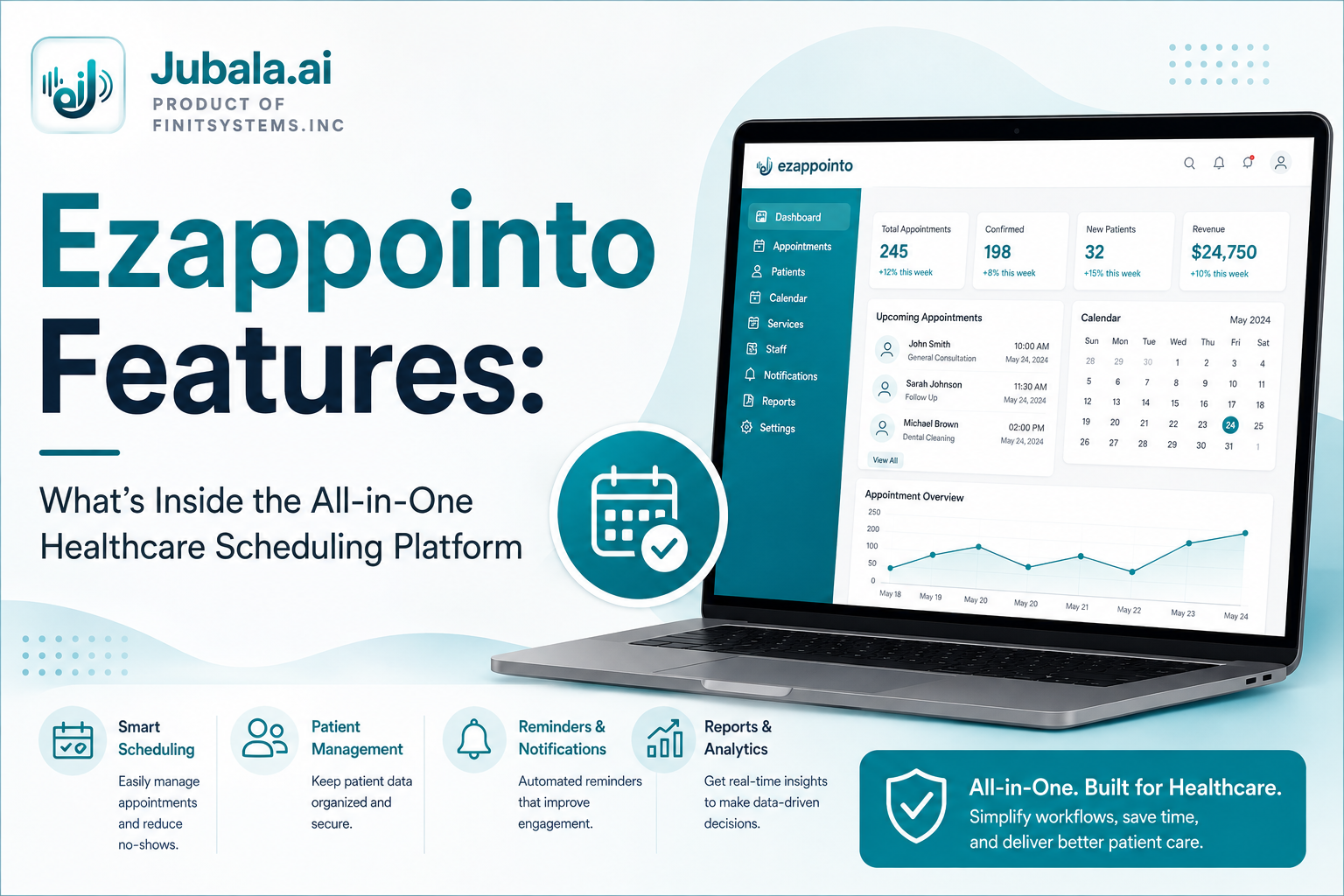
Running a medical practice today means juggling a dozen disconnected tools — a booking calendar, a video call app for telehealth, a separate payment processor, a filing cabinet (or half-updated spreadsheet) for intake forms, and an EMR system that doesn't talk to any of it. Ezappointo was built to collapse that stack into one platform. Instead of stitching together five vendors and hoping the data lines up, clinics get scheduling, telemedicine, digital forms, payments, EMR syncing, and analytics under a single login.
This piece walks through what each of those features actually does, who benefits from them, and how they fit together in daily clinic operations. The goal here isn't just to list what the platform includes, but to explain why each piece matters for a practice trying to run more efficiently without hiring extra staff just to manage software.
Seamless Online Scheduling
At its core, Ezappointo is a booking engine that lets patients find and reserve appointments with verified professionals without a phone call. That sounds simple, but the value shows up in the details: patients can browse provider availability in real time, pick a slot that fits their schedule, and get confirmation instantly, which removes the back-and-forth that eats up front-desk staff time.
For providers, the scheduling side isn't just a public-facing calendar. It's the backbone that every other feature plugs into — video visits sync to it automatically, payments attach to specific booked slots, and reminders fire based on it. If you want to see how the booking flow looks from a patient's perspective, the demo walks through the full experience end to end.
Reminders deserve a specific mention here, since they solve a problem that costs practices real money. The Agency for Healthcare Research and Quality has found that reminder and recall systems consistently improve appointment attendance and cut down on no-shows, since a meaningful share of missed visits come down to patients simply forgetting rather than deciding not to attend. Automated notifications built into the scheduling flow handle that problem without adding a single task to a receptionist's day.
Built-In Video Consultations
Telehealth is where Ezappointo distinguishes itself from a basic booking tool. Rather than sending patients off to a third-party video app — which introduces friction, extra logins, and often confusion about which link to click — video visits happen directly inside the platform.
A few pieces make this work smoothly. Patients join with a single click straight from their email reminder, without downloading software or creating a separate account. Sessions sync automatically with the scheduled appointment time, so there's no manual coordination between the calendar and the call. Providers get a virtual waiting room, letting them admit patients in order and keep sessions organized rather than dealing with people dropping into a call unannounced. And real-time notifications alert both sides when a session is about to start, cutting down on missed video visits the same way appointment reminders cut down on missed in-person ones.
This matters more than it might seem at first glance. Telehealth regulation in the US runs through HIPAA, and the Department of Health and Human Services has been explicit that any platform handling protected health information during a video visit needs to meet the same privacy and security standards as an in-person encounter. Building video natively into the platform, rather than bolting on a generic consumer video tool, is part of how Ezappointo keeps that compliance story intact.
Digital Forms and Paperless Intake
Clipboards and printed intake packets are still standard in a surprising number of clinics, and they create work at every stage — printing, scanning, filing, and eventually re-entering the same information into a computer system by hand. Ezappointo's digital forms feature removes that entire chain.
Existing paper intake forms can be uploaded and converted into fillable digital forms without redesigning them from scratch, which matters for practices that already have forms they like and don't want to rebuild. From there, fields can be added, removed, or adjusted through a straightforward editor, and any change goes live instantly so every patient sees the current version rather than an outdated one. Patients complete these forms before they arrive, which means less time spent in the waiting room and less staff time spent transcribing handwriting.
The bigger win here is upstream of the appointment itself. When intake information arrives digitally and in advance, providers walk into the visit already knowing the patient's history, medications, and reason for the appointment, instead of reviewing a clipboard in the two minutes before walking into the room.
Secure Online Payments
Getting paid is often the most friction-heavy part of running a practice, and Ezappointo folds payment collection directly into the booking flow. Integration with Stripe and PayPal means practices can start accepting payments through providers patients already trust, without building custom payment infrastructure from scratch.
Consultation fees, deposits, follow-up charges, and other service costs can all be collected at the point of booking, which reduces the number of unpaid or partially paid visits a practice has to chase down afterward. Every transaction, invoice, and payment status update lands in a centralized dashboard, so front-desk and billing staff aren't cross-referencing three different systems to figure out who's paid and who hasn't.
Because this runs through encrypted, HIPAA-ready workflows, sensitive billing and patient information stays protected the same way clinical data does — payments aren't treated as a separate, less secure add-on bolted onto the platform.
EMR Integration
For practices that already run on an established electronic medical record system, Ezappointo connects to it rather than asking staff to maintain two parallel systems. The platform integrates with several major EMR and EHR providers, including Tebra, athenahealth, eClinicalWorks, ModMed, and NextGen Healthcare, syncing appointments and patient details automatically between the two.
That real-time sync matters because manual double-entry between a scheduling tool and an EMR is where errors creep in — a patient reschedules in one system and the other never catches up, or a note gets entered in the EMR but never reflected in the appointment record.
With integration, both systems stay current without a staff member manually reconciling them.
This kind of interoperability is a long-standing priority in US health IT policy, not just a nice-to-have feature. HealthIT.gov, the federal office overseeing EHR standards, has pointed out that fragmented, siloed systems limit how effectively health data can support actual patient care, and that letting different systems exchange information smoothly is central to making the right data available to the right people at the right time. EMR integration typically takes two to three weeks to set up depending on the specific provider involved, and a one-time setup fee applies, which is worth budgeting for ahead of a rollout.
Forecasting and Analytics
Beyond day-to-day operations, Ezappointo gives practices visibility into how the business itself is performing. The analytics suite tracks revenue trends, appointment volume, customer behavior, and booking patterns, turning what used to live in scattered spreadsheets into a single live dashboard.
The forecasting piece is particularly useful for staffing decisions. Being able to predict busy periods before they happen — for both providers and patients — means practices can adjust staffing levels proactively instead of reacting to a fully booked week after it's already underway. Over time, this kind of data also surfaces patterns that aren't obvious from day-to-day operations, like which services generate the most repeat bookings or which time slots go consistently underused.
None of this requires a dedicated data analyst to interpret. The dashboard presents revenue and booking trends in a format practice managers can act on immediately, rather than exporting numbers into a separate spreadsheet to make sense of them. For a small clinic, that's often the difference between analytics that actually get used and a report that sits unread in an inbox.
HIPAA Compliance and Data Security
Every feature described above ultimately rests on one requirement: the platform has to be safe to use with real patient data. Ezappointo is built around HIPAA-conscious workflows throughout, not layered on as an afterthought, and it publishes a Business Associate Agreement for practices that need one on file, which can be reviewed on the BAA page.
This is a genuinely important distinction to make, because HIPAA compliance isn't optional for covered healthcare providers using any kind of digital scheduling or telehealth tool. Under current CMS telehealth payment policy, virtual visits are treated the same as in-person care for reimbursement and compliance purposes, which means the platform handling those visits carries real regulatory weight, not just convenience value.
Who Ezappointo Is Built For
The feature set points toward a fairly broad range of healthcare and wellness providers rather than one narrow specialty. Solo practitioners get an all-in-one system without needing to manage five separate vendor relationships. Multi-provider clinics get centralized scheduling and analytics across an entire team. And wellness professionals outside strict medical practice — therapists, counselors, and similar providers — benefit from the same booking, video, and payment infrastructure without needing hospital-grade IT support to set it up.
Professionals looking to join the platform can find more detail through the join as professional page, while patients searching for a provider already using the system can browse through find services.
Getting Started
None of these features require a lengthy technical rollout to try. A free demo walks through scheduling, video visits, and the rest of the platform in context, and pricing is laid out clearly enough to compare against whatever combination of tools a practice is currently paying for separately. Given that most clinics are running scheduling, telehealth, payments, and intake as four or five unrelated subscriptions today, consolidating into one platform often turns out to be a cost decision as much as a workflow one.
For practices weighing the switch, it's worth checking the pricing page directly rather than guessing at cost from feature lists alone, since plans tend to scale with the number of providers rather than charging a flat fee regardless of practice size. Questions that come up before signing up are usually answered on the contact page, and a look through the company's background gives a sense of where the platform is headed next.
Final Thoughts
What stands out about Ezappointo isn't any single feature in isolation — plenty of standalone tools handle scheduling, or video visits, or payments reasonably well on their own. The value comes from how tightly those pieces connect: a booked appointment triggers a reminder, syncs to a video room, pulls in a completed intake form, and processes payment, all without a staff member manually bridging the gap between systems. For a healthcare practice trying to reduce administrative overhead without compromising on HIPAA compliance, that kind of integration is the actual feature worth paying attention to.